IMF Chief at Davos: Ai Will Affect 40% of Jobs Worldwide
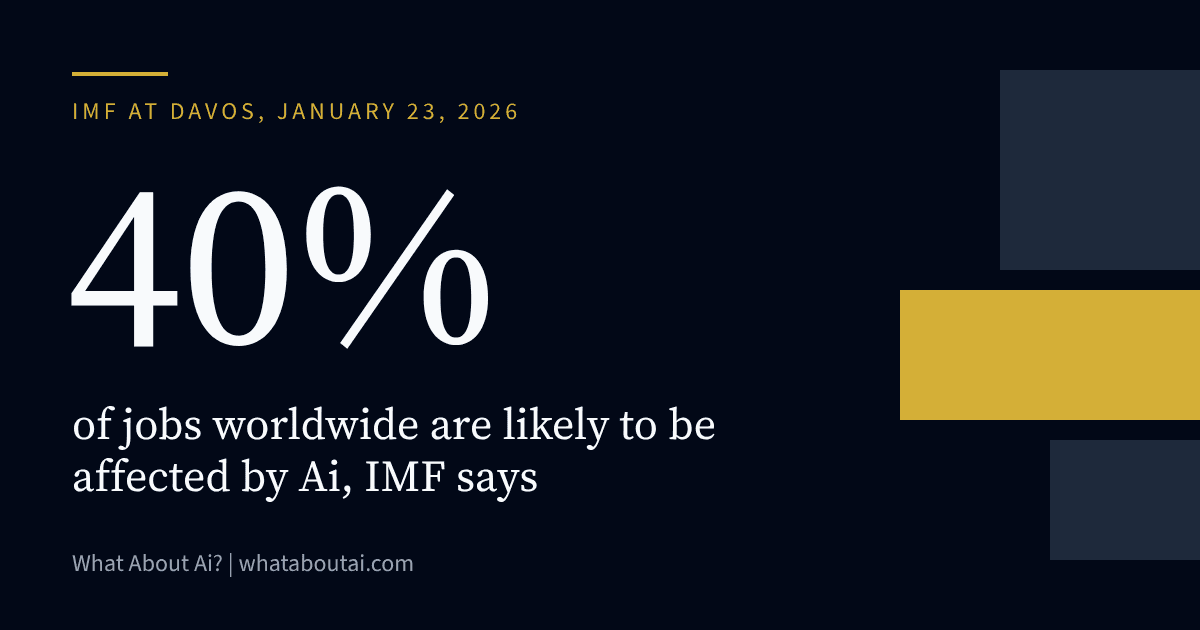
At Davos on January 23, IMF head Kristalina Georgieva said Ai is likely to affect about 40% of jobs worldwide and 60% in advanced economies, and that entry-level workers will feel it first.
At Davos on January 23, IMF head Kristalina Georgieva said Ai is likely to affect about 40% of jobs worldwide and 60% in advanced economies, and that entry-level workers will feel it first.
Source: What About AI? — James Perkins
J
Former Head of In-Store Payments at JPMorgan Chase, where he led a global payments organization. Serial entrepreneur and co-creator of FlashQoE, with 18+ years in payments and enterprise technology. Founder of What About AI?
What she said
Kristalina Georgieva, the managing director of the International Monetary Fund, spoke on a panel at the World Economic Forum in Davos on January 23. Fortune reported her remarks the same day.
She said Ai is likely to affect about 60% of jobs in advanced economies and about 40% of jobs worldwide. She described it as "like a tsunami hitting the labor market."
She was specific about who gets hit first. Ai removes the kind of tasks that entry-level jobs are made of, so young people have fewer starting roles to compete for. She also said the middle class will be affected. Pay rises for workers whose jobs get a productivity boost from Ai, and workers whose jobs do not get that boost can be squeezed.
It was not all bad news. Roughly half of the workers who are exposed could benefit from Ai. Fortune also cited a Brookings Institution analysis that found automation was at least two or three times as likely to affect starting roles as managerial ones.
Her biggest worry, she said, is that Ai is rolling out faster than policymakers can put rules around it.
How I read it
The 40% and 60% figures count jobs that are affected. They do not count jobs that are lost. A job can be affected by getting easier, by paying more, or by going away. I think people hear the big number and assume the worst case.
My read is that the entry-level point is the one to take seriously. I managed a large engineering organization, and entry-level roles are where people learn the work. If the simple tasks go to software, new workers have to find another way to get that experience.
I also would not wait for regulation. Whatever policymakers decide, it will take time, and your career decisions are due sooner.
What I would do
- If you are early in your career, use Ai tools every day and keep examples of what you produced with them. Apply for roles where you will work next to senior people, because that is where judgment gets taught.
- If you are mid-career, find out which side of the split you are on. Ask whether Ai makes you more productive in your current role. If it does, build on that this year. If it does not, look at nearby roles where it does.
- If you manage people, keep at least some entry-level hiring. Junior people are the ones you will promote later.
If you want help making a plan, that is what my coaching is for.
Sources
Have a question about this?
James reads every message and usually replies within a day.
Tags:#IMF#Davos#entry-level jobs#career planning#job market
Check Your AI Career Risk
Take our free quiz to get a personalized assessment of how AI might impact your specific job and industry.
Take the Free QuizRelated Articles
Gallup: 36% of Frequent Ai Users Say Their Employer Now Expects More Output
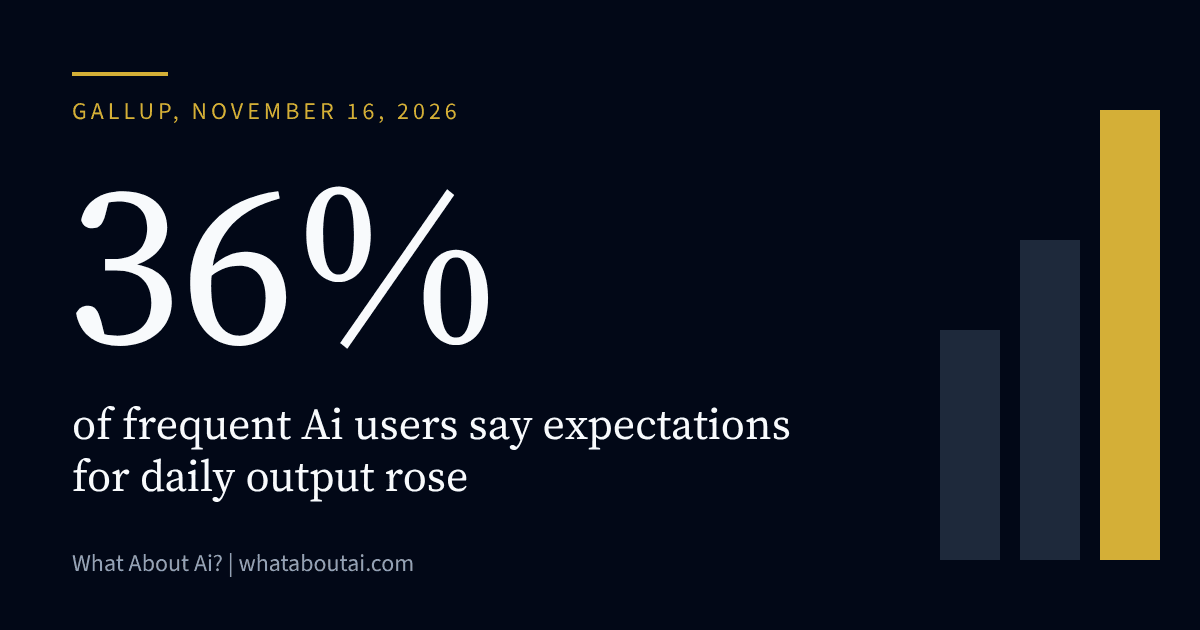
A Gallup survey of 21,648 U.S. workers found 32% now use Ai at work a few times a week or more. Of those frequent users, 36% say expectations for daily output have gone up. Here is what I would do with that.
Employers Blamed Ai for 1,265 Job Cuts in October, the Lowest Month of 2026
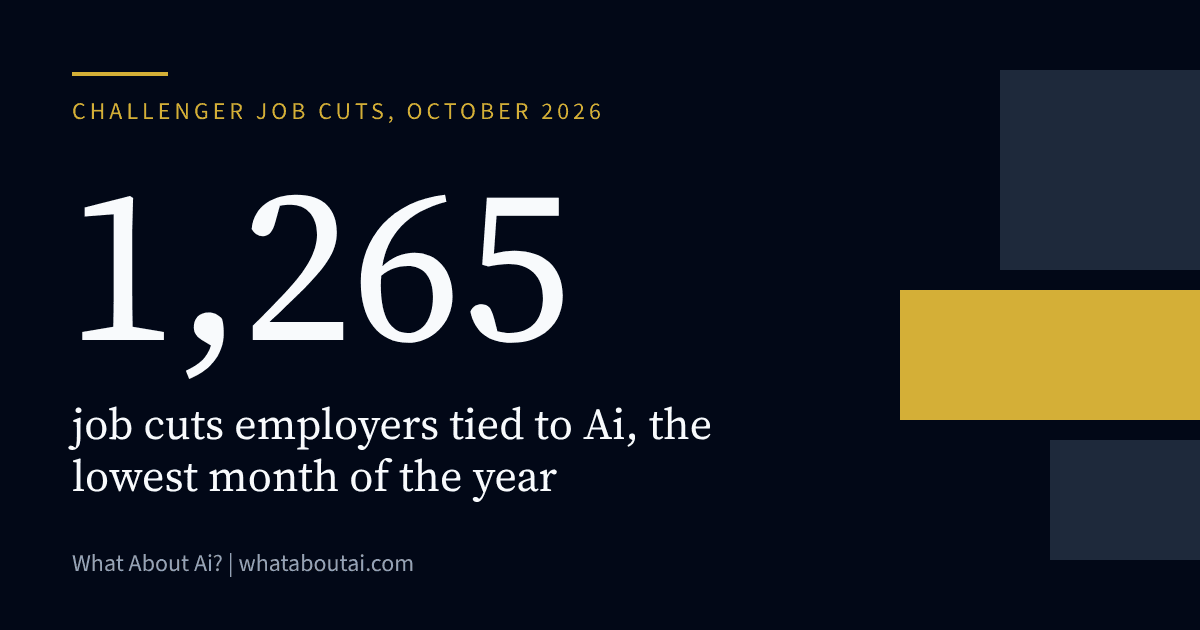
Challenger, Gray & Christmas counted 1,265 job cuts that employers tied to Ai in October, the lowest month of 2026. The year-to-date count is still 121,401. Here is how I read both numbers.
Ai Was the Reason for 9% of September Job Cuts, Down From a Third in July
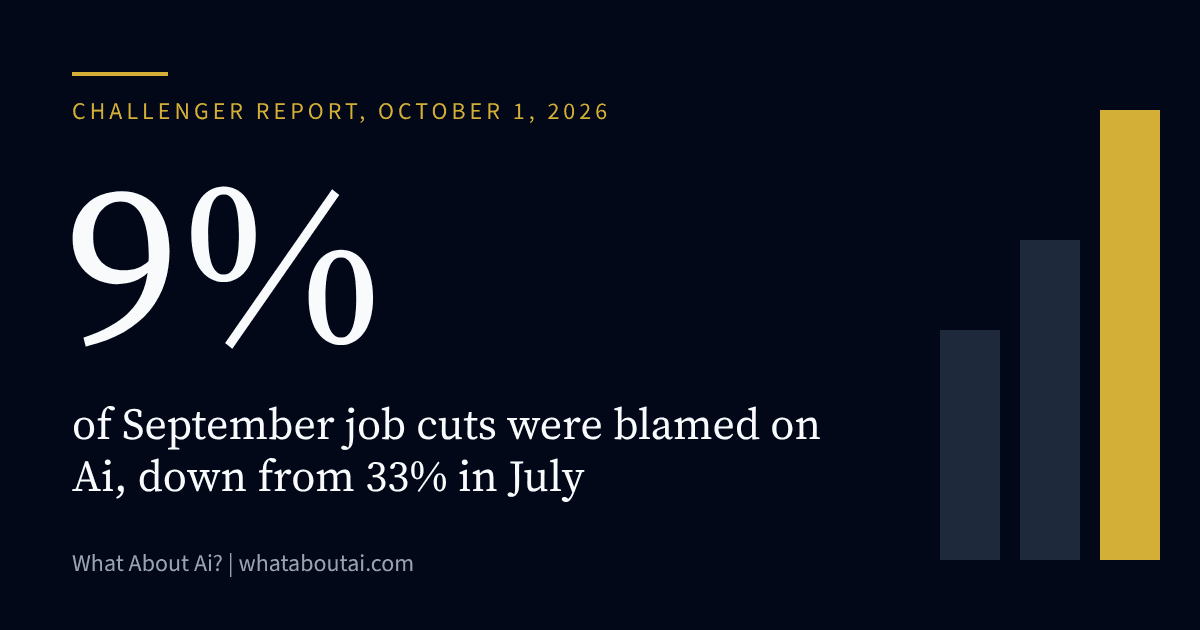
Challenger counted 43,281 announced job cuts in September and employers blamed Ai for 3,961 of them. Ai is still the top reason for the year at 120,136, and hiring plans were the weakest for a September since 2011.