Gallup: 36% of Frequent Ai Users Say Their Employer Now Expects More Output
A Gallup survey of 21,648 U.S. workers found 32% now use Ai at work a few times a week or more. Of those frequent users, 36% say expectations for daily output have gone up. Here is what I would do with that.
A Gallup survey of 21,648 U.S. workers found 32% now use Ai at work a few times a week or more. Of those frequent users, 36% say expectations for daily output have gone up. Here is what I would do with that.
Source: What About AI? — James Perkins
J
Former Head of In-Store Payments at JPMorgan Chase, where he led a global payments organization. Serial entrepreneur and co-creator of FlashQoE, with 18+ years in payments and enterprise technology. Founder of What About AI?
What happened
Gallup published new workplace data on November 16. It comes from a survey of 21,648 employed U.S. adults taken August 5 to 19, 2026.
53% of employees use Ai at work at least a few times a year. 32% use it a few times a week or more, and Gallup calls them frequent users. 16% of all employees use it every day. In May 2023, 4% used it daily.
The gap by job type is large. 49% of workers in remote-capable jobs use Ai frequently, and 22% of on-site workers do. Among remote-capable workers, 57% of leaders are frequent users and 46% of individual contributors are.
Gallup also asked frequent users where their time went. 88% say Ai changed how they spend their time. 52% spend less time searching for information and 47% spend less time writing and drafting. 21% spend more time reviewing and correcting work, and 21% spend more time learning new skills or tools.
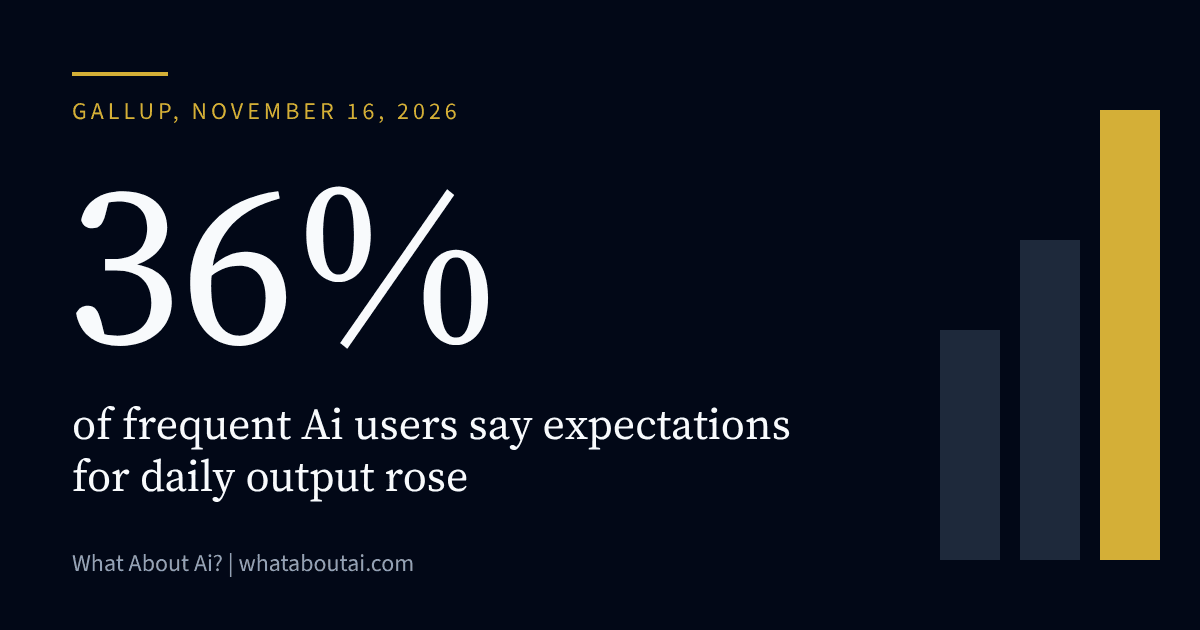
Then there is the pressure. 36% of frequent users agree that Ai has raised expectations for their daily output. For infrequent users it is 16%. 33% of frequent users feel pressure to use Ai to keep up, and 17% of infrequent users do.
How I read it
My read is that the time Ai saves is not staying with the worker. About one in three frequent users already see the bar going up. I managed a large engineering organization, and that is what I would expect. When a team gets faster, the plan for the next quarter gets bigger.
I also notice who uses it most. Leaders are ahead of the people who report to them. If your boss uses Ai every day and you do not, your boss already has a sense of how long your work should take.
I think the review number matters too. A fifth of frequent users spend more time checking and fixing work. Checking output is becoming a real part of the job, and it takes skill in the subject.
What I would do
- If you use Ai less than weekly, change that this month. Start with searching and first drafts, because that is where most users save time.
- Keep a short log of what you finish each week. If expectations rise, you want your own record of your output.
- Get good at reviewing. Learn where the tool makes mistakes in your field and check those spots every time.
- Ask your manager what they expect from Ai use on your team. It is better to hear the new bar than to guess at it.
If you want help making a plan, I offer career coaching.
Sources
Have a question about this?
James reads every message and usually replies within a day.
Tags:#Gallup#workplace survey#productivity#performance expectations#career advice
Check Your AI Career Risk
Take our free quiz to get a personalized assessment of how AI might impact your specific job and industry.
Take the Free QuizRelated Articles
Gallup: 54% of U.S. Employees Have Not Used Ai in Their Job
A Gallup study of 15,482 employees found 28% use Ai at least weekly and 54% have not used it at work. Regular users report most of the benefit, and they are mostly college graduates and managers.
Companies That Adopt Ai Hire More Senior Workers and Fewer Junior Ones
A study of 41 countries and 154 million employment records found senior employment rose 6.7% over five years at companies adopting Ai, while junior employment fell 3%. Here is what I would do with that.
A New Survey Says 3% of Workers Have Lost a Job to Ai Since 2023
A YouGov survey of 1,250 US workers found about 3% lost a job to Ai since 2023, while about 9% got a promotion tied to it. The survey only counted people who are working now.