Stanford Now Tracks Ai and Jobs Monthly. Young Workers in Exposed Jobs Are Down 3.8% a Year.
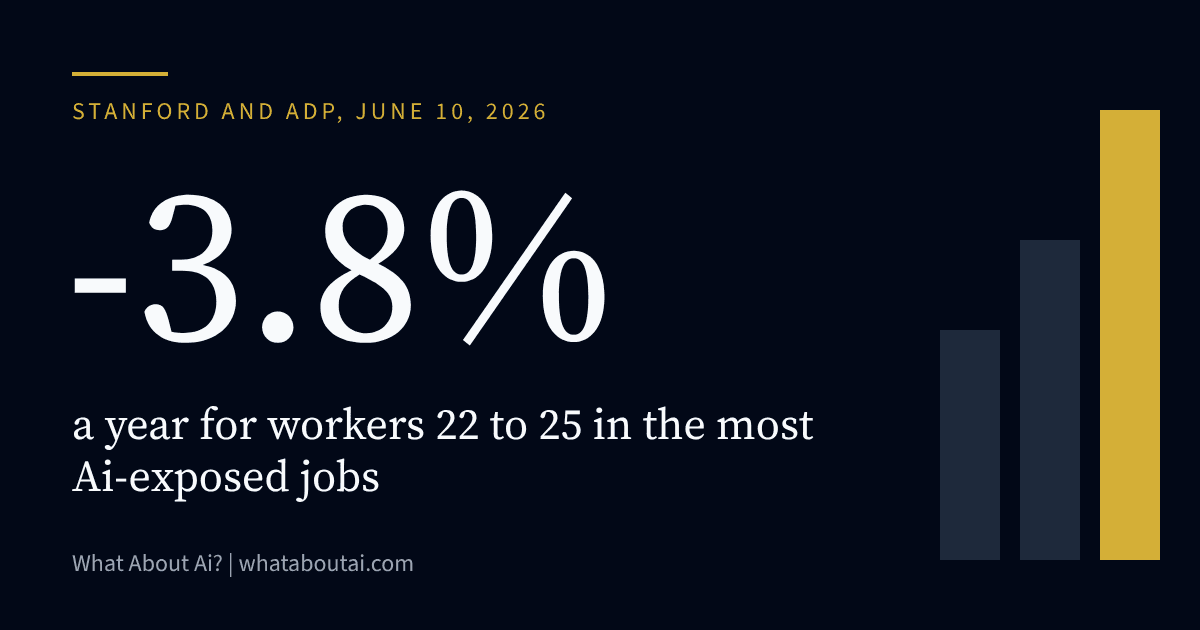
Stanford and ADP launched a free monthly tracker of Ai and employment. The first numbers show workers aged 22 to 25 in the most exposed jobs losing ground at 3.8% a year, while those jobs still grow across all ages.
Stanford and ADP launched a free monthly tracker of Ai and employment. The first numbers show workers aged 22 to 25 in the most exposed jobs losing ground at 3.8% a year, while those jobs still grow across all ages.
Source: What About AI? — James Perkins
J
Former Head of In-Store Payments at JPMorgan Chase, where he led a global payments organization. Serial entrepreneur and co-creator of FlashQoE, with 18+ years in payments and enterprise technology. Founder of What About AI?
What happened
On June 10 the Stanford Digital Economy Lab launched the AI Economic Indicators, a free site at indicators.stanford.edu. It has three dashboards. The Canaries Dashboard tracks jobs each month using anonymized payroll data from ADP Research. The Takeoff Tracker looks for signs of Ai-driven growth in the whole economy. The Adoption Monitor tracks how many workers and firms use Ai.
The first research note covers 25,000 firms and 4.6 million workers in more than 730 occupations, over five years ending April 2026.
For workers of all ages, the jobs most exposed to Ai grew 1.1% a year. The least exposed jobs grew 2.0% a year. The authors call that gap modest.
For workers aged 22 to 25, the picture is different. Their employment in the most exposed jobs fell 3.8% a year, while the least exposed jobs grew 2.0% a year. Occupations where more of the Ai use is automation showed declines or weaker gains for these young workers. Where the use is more about assisting people, the note found no clear relationship.
The Takeoff Tracker checks 12 indicators. Seven show no evidence of an Ai-driven economic takeoff, three show mild evidence and two show strong evidence. The lab also says its payroll sample does not represent the full US labor market.
How I read it
Lab director Erik Brynjolfsson wrote, "We are flying blind into one of the most consequential periods in world history." I think a monthly number from payroll records is more useful than layoff headlines, because it counts people who are employed and does not depend on what a company says.
My read is that exposed jobs are still growing when you count workers of all ages, and the pressure is on entry-level hiring. I managed a large engineering organization. Junior roles are where people learn the basics by doing routine work. That routine work is what Ai tools do first.
The economy-wide numbers do not show a sudden change. I would treat this as a slow shift that is hitting one group early.
What I would do
- If you are early in your career, do not compete on routine output. Learn the Ai tools used in your field and aim for roles where you check the work, deal with customers or own a result.
- If you are experienced, the data is on your side for now. Use the time to learn the tools and to take on work that needs your judgment.
- If you hire, keep some junior roles and redesign them around reviewing Ai output. Otherwise I think you will have no one ready to promote in five years.
- Look up your occupation in the job impact directory and compare it with the Stanford dashboard each month.
Sources
Have a question about this?
James reads every message and usually replies within a day.
Tags:#Stanford#ADP#entry-level jobs#labor market#early career
Check Your AI Career Risk
Take our free quiz to get a personalized assessment of how AI might impact your specific job and industry.
Take the Free QuizRelated Articles
Employers Blamed Ai for 1,265 Job Cuts in October, the Lowest Month of 2026
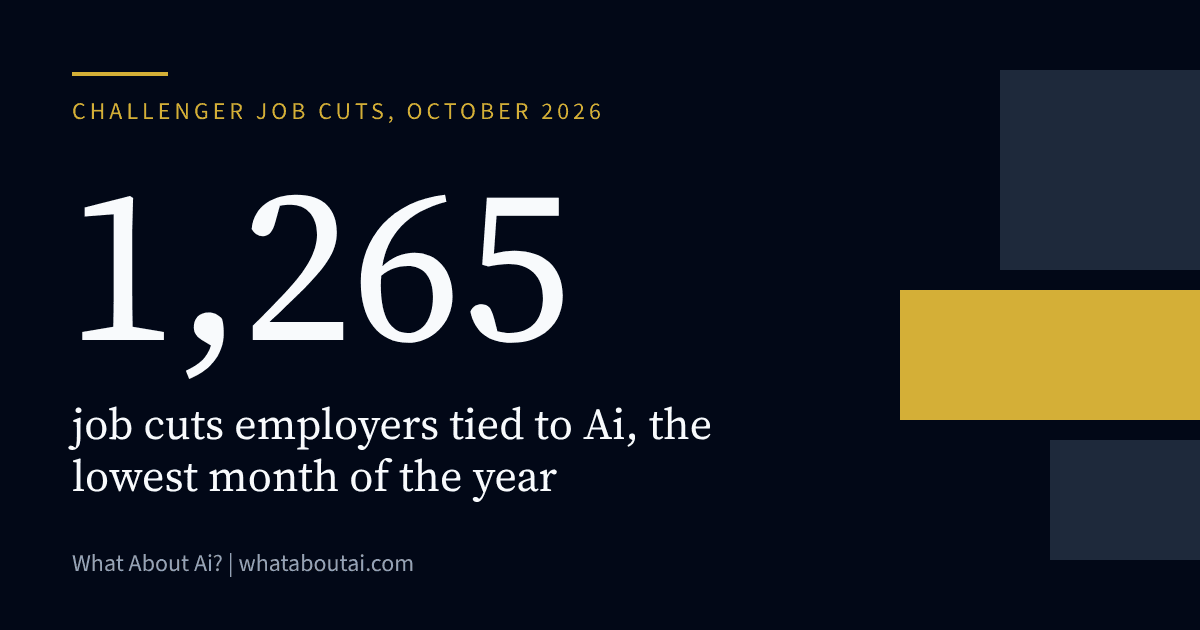
Challenger, Gray & Christmas counted 1,265 job cuts that employers tied to Ai in October, the lowest month of 2026. The year-to-date count is still 121,401. Here is how I read both numbers.
Barclays Will Cut 5,000 Jobs This Year and Says Ai Is Only Part of the Reason
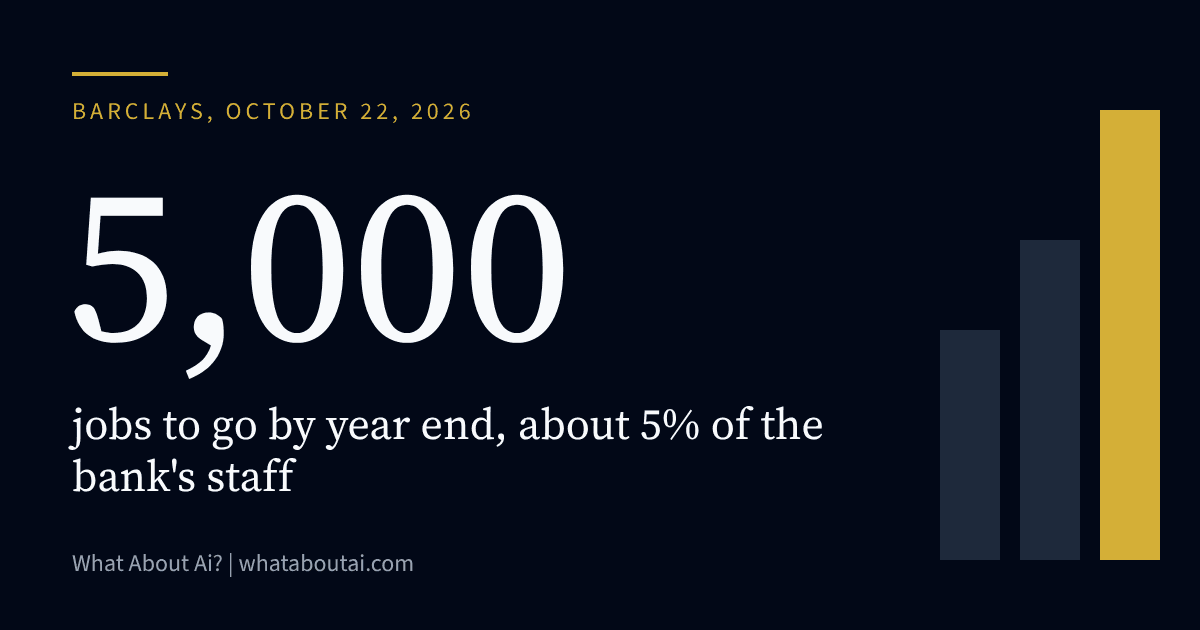
Barclays expects to cut about 5,000 jobs in 2026, about 5% of its staff, and about 60% will come from support functions including developers. The CEO says older technology spending did most of it. Ai did less.
Kroger Will Cut 3,000 Corporate Jobs Over Three Years
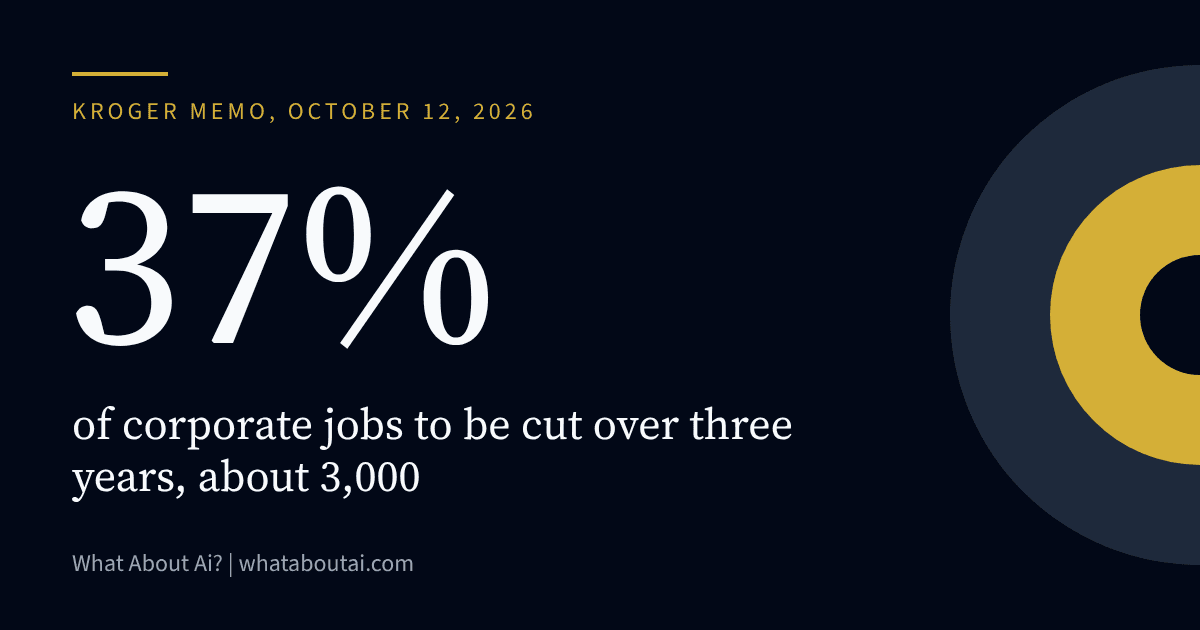
Kroger plans to eliminate about 3,000 corporate positions over three years, about 37% of its office staff. The CEO's memo points to technology and to too many layers. Here is which jobs I think are exposed.